LIVING CHURCH · VISIT RESPECTFULLY
Allen Chapel African Methodist Episcopal Church
See the exterior from public space unless the congregation is holding an event open to visitors. It remains a worshiping community, not a museum.
The city’s springs, mills and cotton economy were shaped by Black labor before emancipation. Black families then built churches, schools, businesses and burial traditions under freedom constrained by segregation. Their history is not an appendix to New Braunfels. It is part of the foundation.
By Tony DePass · Historical feature · Sources checked September 2026
New Braunfels tells its German immigration story confidently. It should. The Adelsverein migration, language, architecture and institutions are central to the city. But confidence becomes distortion when one inheritance fills the frame so completely that Black residents appear only after emancipation—or not at all.
African Americans were present in Comal County before the Civil War, some held as property by the same developing economy celebrated in accounts of mills, cotton and commercial growth. After emancipation, Black families made lives inside a county where they remained a small minority and where public space, schooling and burial were segregated. Their churches became places of worship, leadership, education, mutual aid and memory. Their story is harder to see in the tourist landscape, but it is not less important.
The 1860 census counted 193 African Americans in Comal County. That number is often repeated without explaining the human system behind it. Federal slave schedules typically recorded the enslaver’s name while reducing enslaved people to age, sex and color. The archive itself therefore carries the logic of slavery: owners are named; the people they held in bondage are usually not.
One documented New Braunfels case connects enslavement directly to a landscape visitors still use. William H. Meriwether bought the Comal Springs tract in 1847. The 1850 slave schedule lists him as holding thirty people in slavery. According to research published by the Sophienburg Museum and Archives, enslaved laborers dug the millrace that channeled spring water to power his sawmill, gristmill and cotton gin.
That changes how Landa Park and the mill district should be interpreted. The industrial story did not begin with machinery acting by itself. Human beings whose names the census largely withheld reshaped the watercourse and created productive infrastructure. Joseph Landa later bought the property, and later mills became major civic landmarks, but the earlier coerced labor must not disappear beneath the story of industrial progress.
It is tempting to replace one simplified story with another: Germans opposed slavery; Anglo Texans supported it. The evidence is more complicated. Some German Texans, especially political refugees and freethinkers, opposed slavery. Others accepted it, owned enslaved people or treated it with indifference. Comal County was unusual among heavily German Texas counties because its voters supported secession in 1861, and the county sent three German companies into Confederate service.
That does not tell us what every German resident believed. It does tell us that German ethnicity did not place New Braunfels outside the slaveholding South. A serious history must hold both facts at once: antislavery German traditions existed, and slavery operated locally with political and economic protection.
Emancipation ended legal ownership of people, not the unequal distribution of land, capital, education and political power. In 1870, Black residents were 7.1 percent of Comal County’s population, far below their share statewide. The community would become proportionally smaller as the county grew, but the decades after the Civil War produced institutions whose importance cannot be measured by population share.
Black schools formed during Reconstruction. Later, Washington High School served Black students in the segregated system. Segregation meant more than separate buildings: it concentrated the responsibility for education in Black teachers and families while public policy denied equal access to the city’s other schools. New Braunfels moved to integrate after the Supreme Court’s 1954 Brown v. Board of Education decision, but legal integration did not erase the earlier inequality or the community memory carried by the Black school.
The map connects Allen Chapel, Live Oak Baptist and Comal Cemetery to the springs, plaza, West End and Gruene. The archival pictures belong beside the places, with access and respect made clear.
Open the photographed route and mapThe area’s first African Methodist Episcopal congregation was founded in 1890. Members acquired land and built the church now known as Allen Chapel AME. The surviving building is modest, which is exactly why it matters. Black congregations often created durable civic space with fewer financial resources and little recognition from the institutions documenting the rest of town.
An AME church was never only a room for Sunday service. It could provide leadership, funerals, education, mutual assistance, political discussion and a place where Black dignity was affirmed in a segregated society. Allen Chapel should be understood as an institution built by a community, not simply as an old building that happens to remain.
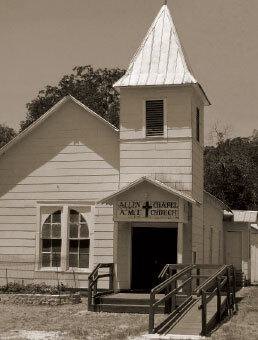
See the exterior from public space unless the congregation is holding an event open to visitors. It remains a worshiping community, not a museum.
In 1900, Lucky McQueen organized fourteen residents into what was then called the Colored Baptist Church of New Braunfels. The group first gathered outdoors beneath a live oak at Houston and Camp Streets. The name Live Oak Baptist preserved that origin after the congregation acquired land and built a permanent church.
The church bell became part of that continuity. When renovations in 1983 showed that its weight threatened the historic structure, the bell was removed and later entered the Sophienburg’s collection. That journey—from a Black congregation to the city archive—should invite a larger question: how many objects, names and stories remain in family or church custody because public institutions did not collect Black history with the same intensity?
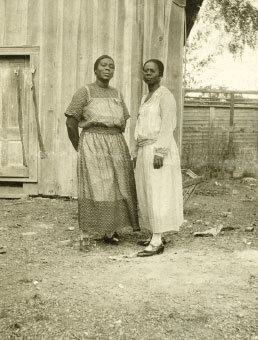
The origin site and church history belong to an active congregation. Attend only public services or programs and do not treat the grounds as an unattended historic attraction.
When the original eight-acre Comal Cemetery was surveyed in 1868, land beside the river was set aside for African American freedpeople. The area was known as “Freedman’s Place” and was once separated by a fence. The fence disappeared, making the imposed boundary difficult for a modern visitor to recognize.
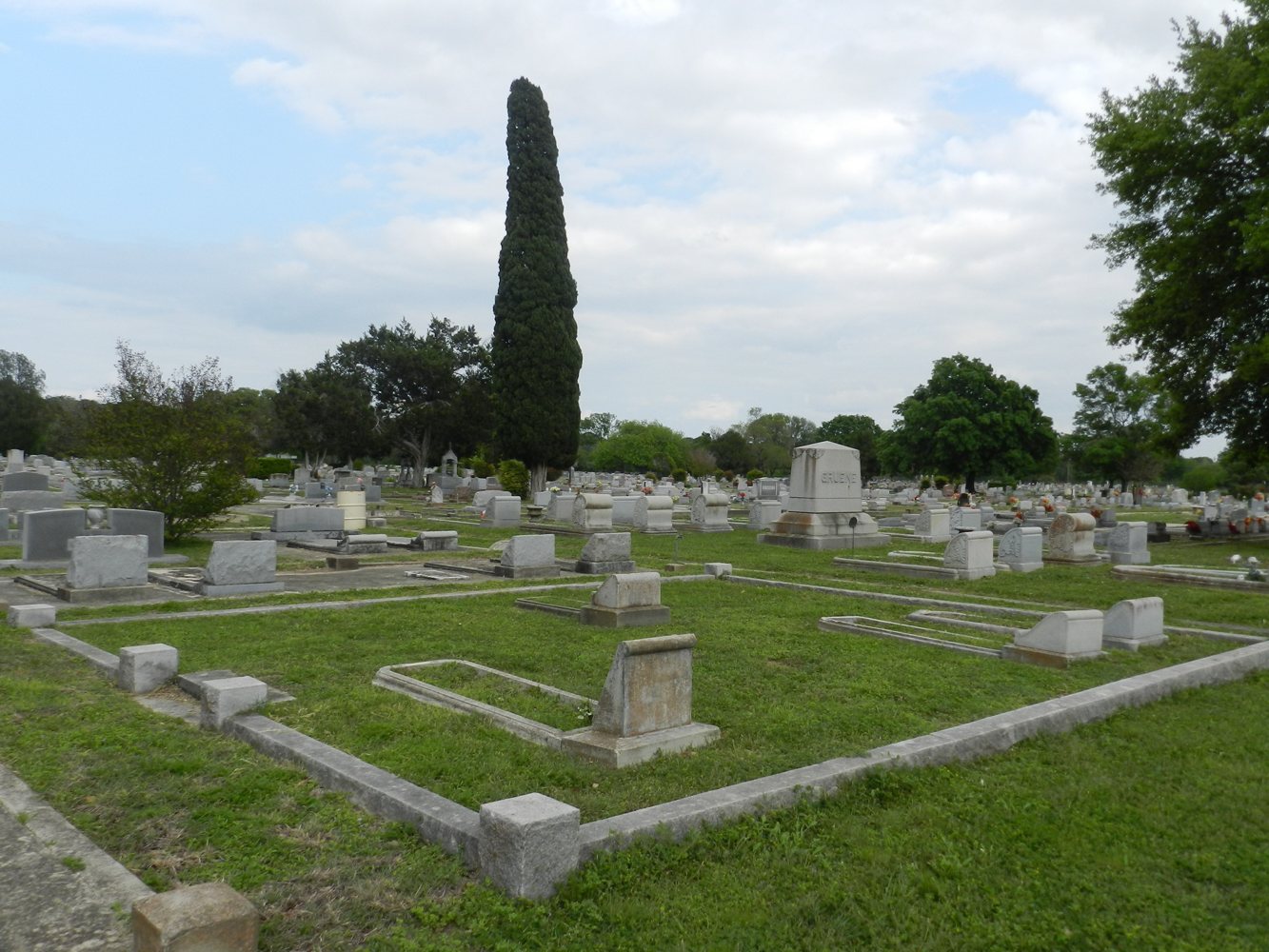
The history is not merely documentary. During archaeological work associated with riverbank stabilization in 2014, investigators found two unmarked grave shafts at the edge of Freedman’s Place. Engineers moved the proposed construction alignment to avoid them. The discovery confirms what many African American cemeteries teach: absence of a stone does not mean absence of a grave, a person or a community claim to the land.
The historic African American section lies within the larger municipal cemetery. The old separating fence is gone, so read the cemetery preservation material before arriving rather than expecting a clearly staged exhibit.
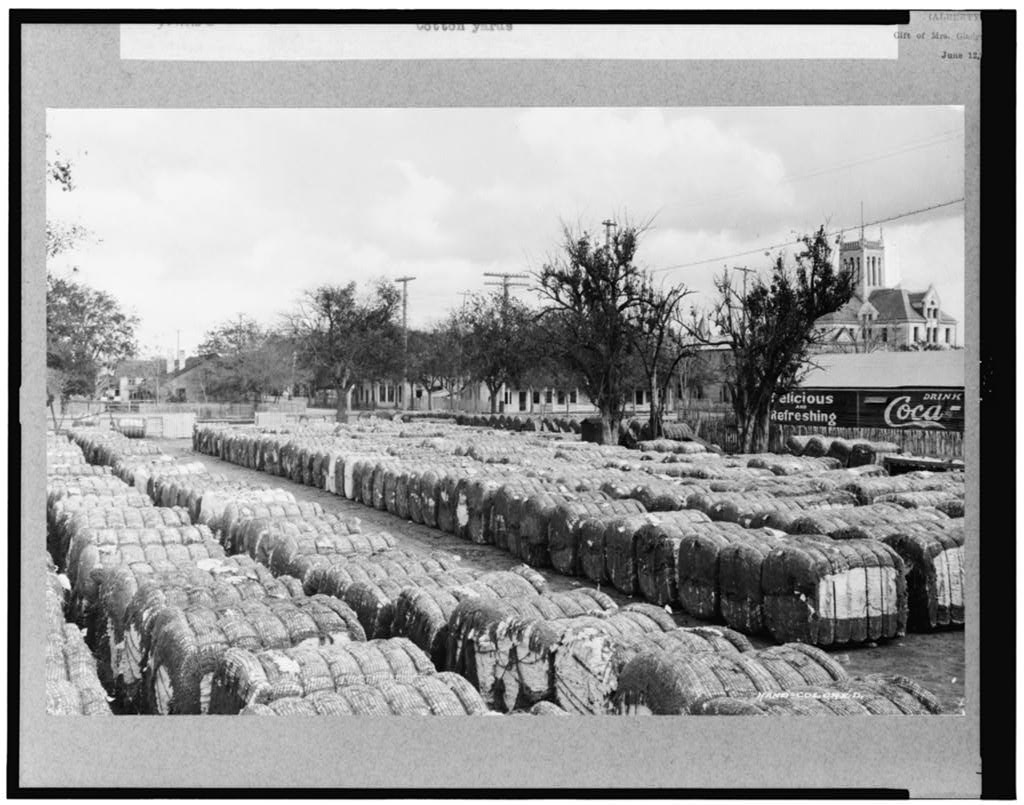
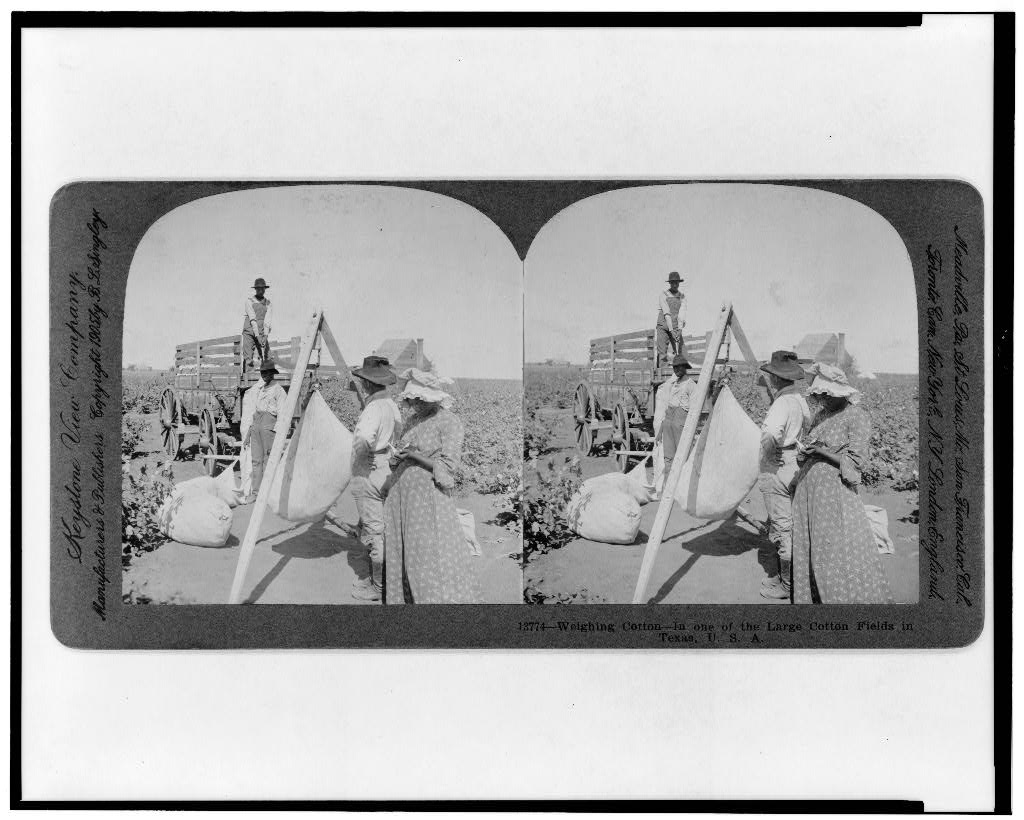
Black residents worked in agriculture, hauling, domestic service, construction, small business and the wider service economy. Cotton connected farms to gins, warehouses, rail lines and textile production. Yet New Braunfels photographs and promotional histories more often identify owners and buildings than laborers. Where a worker is visible, the caption may not provide a name. Where the caption names an industry, it may not identify race.
That limitation must not become an excuse to write labor out. It should change how the evidence is presented. The cotton-yard photograph on this page is indisputably New Braunfels, but it does not document the race of its workers. The Texas cotton-weighing photograph documents African American labor, but not in New Braunfels. Placed together—and labeled honestly—they show both the economic connection and the gap in the local visual archive.
Churches and cemeteries survive because communities protected them. Other parts of Black life are harder to map: homes altered or demolished, segregated classrooms repurposed, businesses missing from tourist histories, family photographs still in private hands and oral histories never recorded. The New Braunfels Black Heritage Society and multigenerational families are therefore not supplements to an official record. They are among the keepers of the record.
Current Juneteenth and Martin Luther King Jr. programs make Black civic presence visible, but commemoration is not the same as historical repair. A home-run treatment of this history requires continued work: naming enslaved people where evidence permits, reconstructing Washington High School, tracing property ownership, identifying teachers and ministers, documenting military service, recording business history and listening to families before memories are lost.
Visit after reading the Meriwether research. The public landscape does not adequately identify the enslaved people who dug the millrace, so carry that knowledge with you rather than looking for an interpretive panel that may not be there.
Black New Braunfels is not a correction made out of politeness. It changes the causal story of the city. The springs became industrial power partly through enslaved labor. Freedom produced schools and congregations because Black residents organized them. Segregated burial space reveals how inequality was imposed even in death. Churches that still stand show what people built despite that inequality.
Once those facts are restored, New Braunfels no longer looks like a culturally uniform German town that later became diverse. It becomes what it was all along: a place made by several communities living with unequal power, each leaving evidence that deserves to be read.
They are part of the city’s central story. I read before I visit, distinguish public access from active congregational space and never use a church or neighborhood as a photograph prop.
Realistic time2–4 hours
Field methodFollow the West End institutions slowly and distinguish public access from active congregations
FallbackUse the article, museum resources and exterior public viewpoints when buildings are closed
Open the field map · Follow the whole-story route · Find a current public program
Allen Chapel AME and Live Oak Baptist are living congregations. A map pin is not permission to enter a building, photograph a service or walk onto private grounds. For an interior visit or a conversation, contact the congregation and arrange it.
Access: confirm steps, entrances, seating and restroom availability directly with the host. For a self-guided exterior stop, use lawful public parking and sidewalks; shorten the route if the group needs frequent seats or shade. Do not infer wheelchair access from a historic photograph.
Tony’s Guide distinguishes documented fact from interpretation. Where a record does not identify a person, worker or congregation member by name or race, this guide does not invent one.