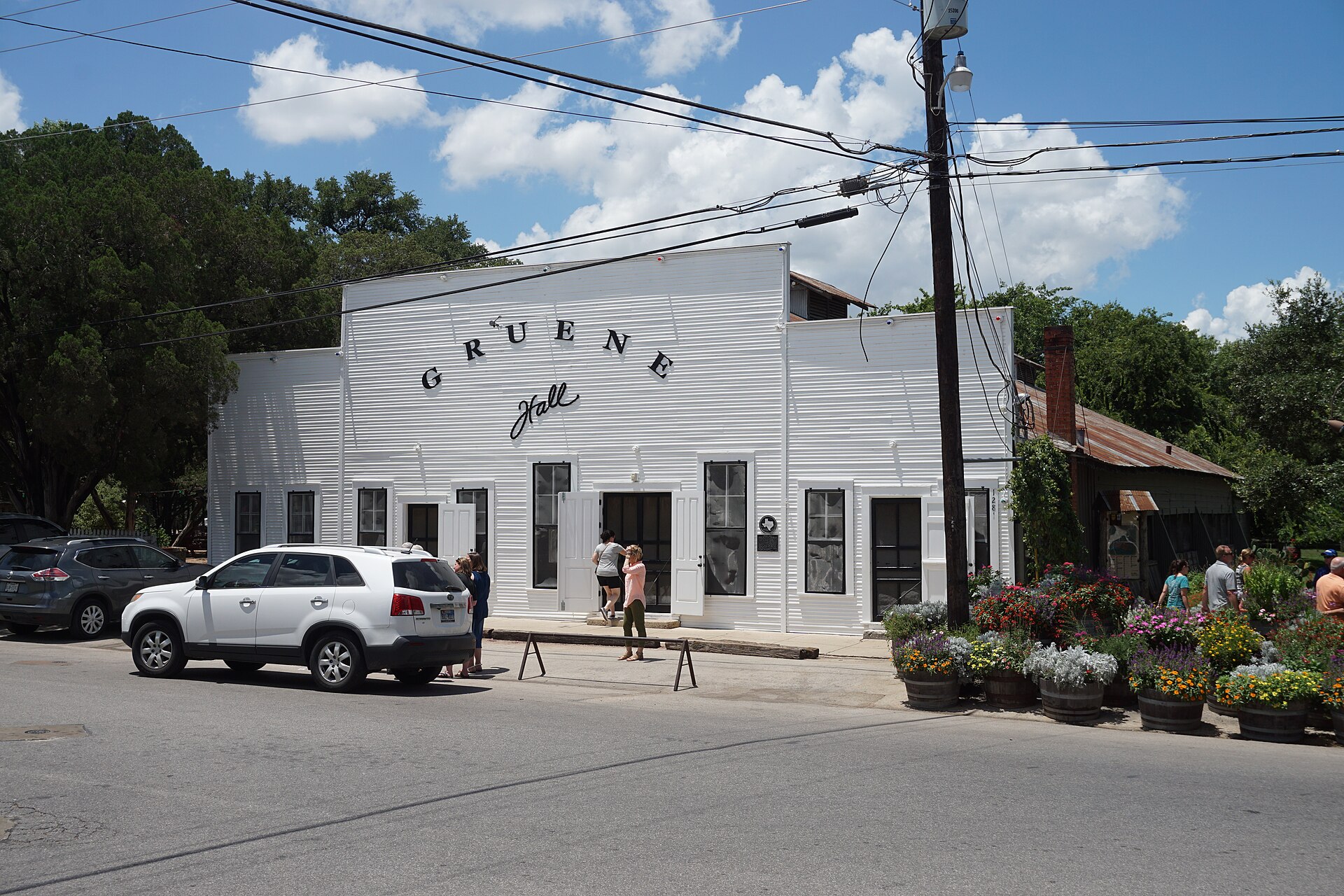
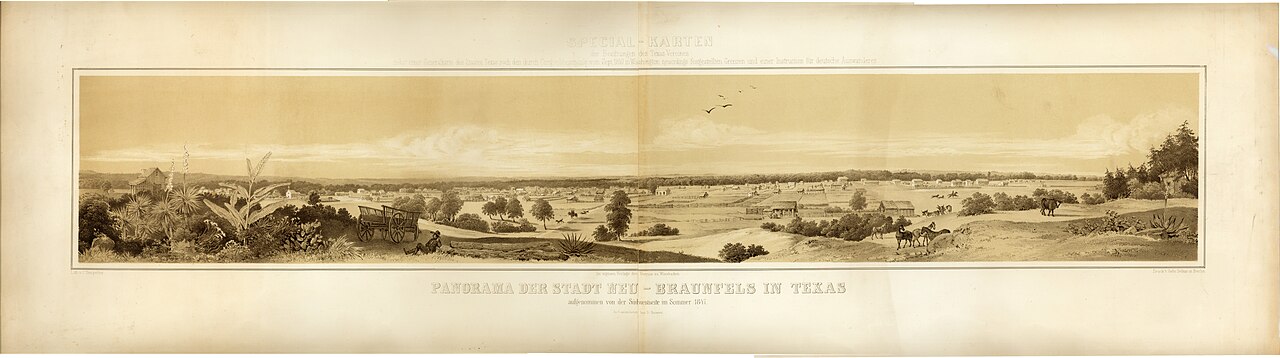
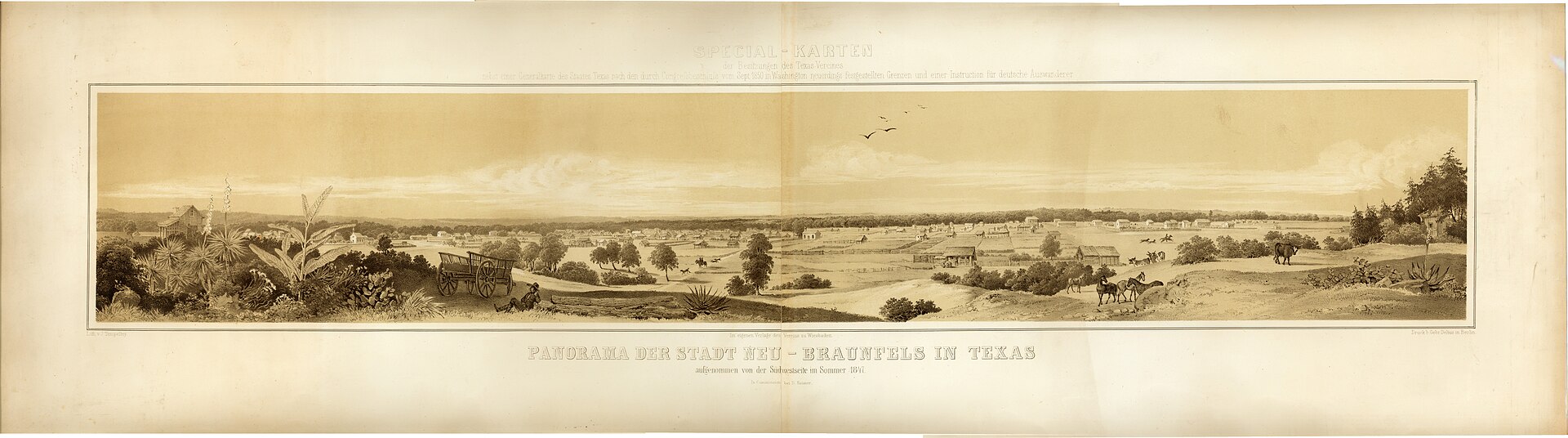
German heritage is not an invented tourism theme here. New Braunfels was founded through one of the most ambitious organized German migration projects in nineteenth-century Texas. The Adelsverein brought thousands of immigrants to Texas in the 1840s and established New Braunfels as its first major colony.
The migration was organized—and chaotic.
The Adelsverein’s plans were grander than its logistics. Immigrants crossed the Atlantic, landed on the Texas coast and then faced the difficult inland movement toward settlement. New Braunfels became both destination and staging point. The organization itself failed financially within a few years, but the communities it created endured.
Culture persisted because institutions persisted.
Language, newspapers, churches, singing societies, schools, clubs, agriculture and civic organizations gave German identity a daily structure. German-language publishing remained important long after immigration slowed. That is why the cultural footprint survived beyond the immigrant generation.
Do not turn people into costumes.
Wurstfest, architecture and food are visible entry points. They are not the whole inheritance. The deeper legacy includes patterns of land ownership, education, associational life, music, political participation and the unusually durable use of German in public and private life.
Migration was organized, risky and political
The Adelsverein promoted settlement through a mixture of idealism, commercial ambition and inadequate preparation. Migrants encountered disease, supply failures, unfamiliar terrain and the consequences of arriving in a place already shaped by Indigenous and Mexican histories.
Institutions made the settlement durable
Churches, schools, newspapers, voluntary associations, businesses and language practices mattered as much as founding personalities. They allowed cultural continuity while residents adapted to Texas, the United States, slavery, war and later pressures toward assimilation.
Heritage is not the same as history
Food, music and festivals preserve real traditions, but heritage presentation selects what is comfortable and marketable. A serious account also asks about land acquisition, relations with existing populations, labor, political conflict and which residents were excluded from the celebratory picture.
What survives
German influence remains in names, institutions, built form and public memory, but it exists alongside Tejano, Black, Indigenous and later migrant histories. New Braunfels is not less German when those stories are included; it is more accurately understood.
Language carried power and vulnerability
German-language churches, schools and newspapers strengthened community life, while war, nationalism and pressure to assimilate narrowed public use of the language. Heritage words and festival phrases cannot substitute for understanding that historical shift.
Class and religion complicated the community
German settlers did not arrive with one politics, one level of wealth or one religious practice. Internal differences influenced institutions and responses to slavery, secession, war and Americanization. “The Germans” is convenient shorthand and poor analysis.
Institutions made the culture durable
Language survived because it had places to operate: households, churches, schools, newspapers, clubs, businesses and public celebrations. When those institutions shifted toward English, language transmission weakened even while visible heritage remained. That is why sausage, architecture and festivals can flourish after everyday German speech declines.
What continuity does—and does not—mean
Descendants still maintain traditions, archives and associations. The city is also shaped by Mexican American, Black and newer communities whose histories overlap the German story. Continuity should not become a claim that culture was unchanged or socially uniform. The more accurate story is adaptation, selective preservation and reinvention.
The planned town had to become a functioning town
The Adelsverein could recruit emigrants and promote a colonial vision, but survival required local knowledge, water, roads, trades, food and institutions. The gap between promotional promise and lived reality is central to the story. Immigration was not a single heroic crossing; it was a difficult conversion of people, capital and political ambition into a durable community.
Continuity came through ordinary institutions
Churches, singing societies, schools, newspapers, businesses and voluntary associations allowed language and custom to survive beyond the immigrant generation. They also carried divisions of class, religion and politics. “German Texas” was never a single mind. Catholics, Lutherans, freethinkers, merchants, farmers and political refugees could share language while disagreeing sharply about authority, slavery and the Civil War.
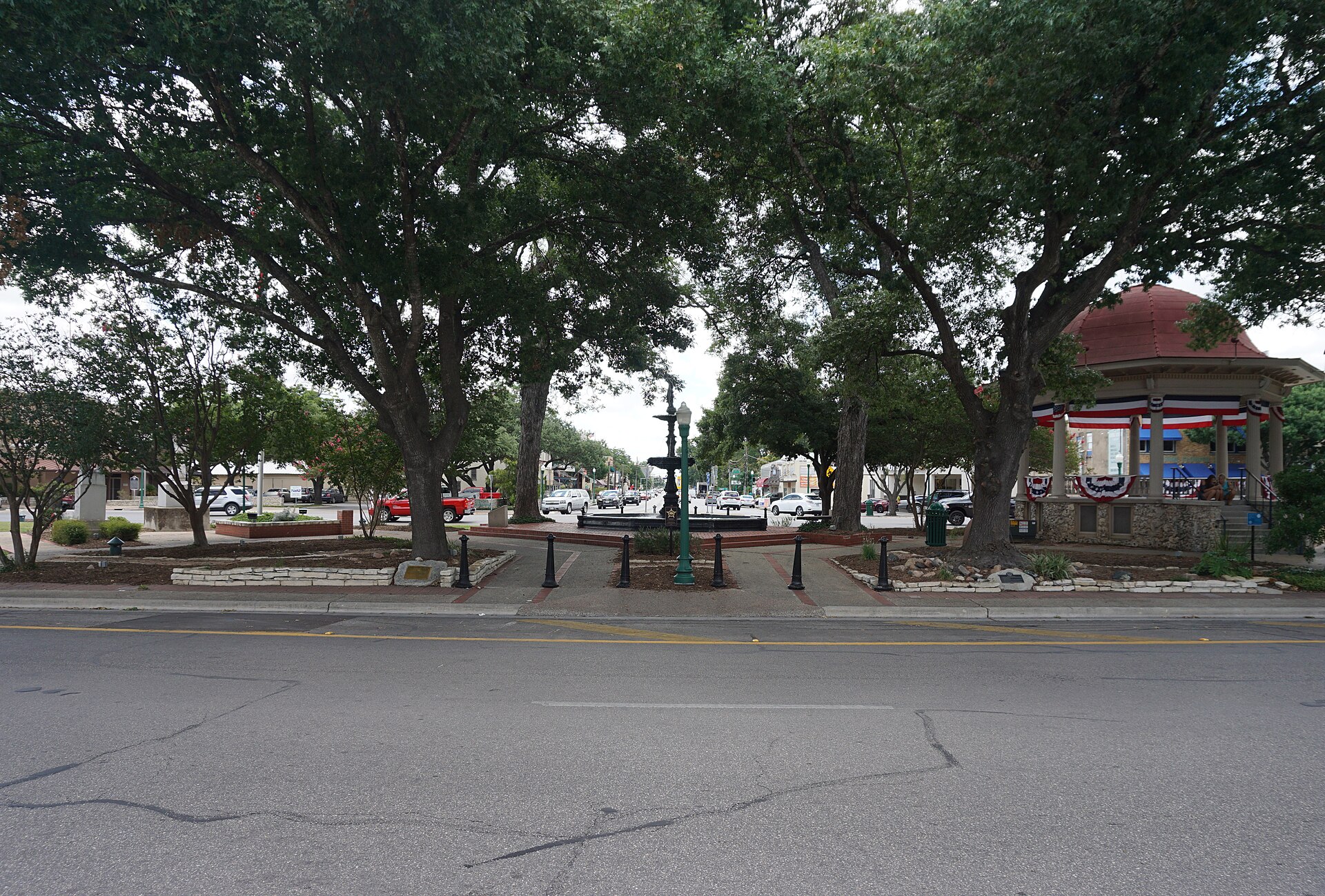
Tony’s read: Enjoy the food, architecture and festivals, but do not confuse heritage performance with the full historical record. The stronger story includes failed promises, epidemics, political conflict, adaptation and the other populations whose labor and land were part of the city’s making.
Migration was organized, risky and political
German migration to Texas involved promoters, associations, contracts, ports, overland movement and competing visions of settlement. New Braunfels emerged from that organized project, but individual migrants arrived with different regions, religions, classes and expectations behind them. “German” was never a single culture transferred intact.
Settlers adapted to Texas law, slavery, war, climate and neighbors who spoke English, Spanish and Indigenous languages. Some opposed slavery; others benefited from or accommodated the racial order. The community created churches, schools, clubs, newspapers and businesses that sustained language while also defining belonging.
Heritage is selective survival
Food, music, architecture and festivals can remain visible after everyday language and institutions weaken. Twentieth-century pressure toward English, especially around the world wars, accelerated language loss. Later heritage revival preserved valued symbols but could simplify conflict and diversity. A serious German-Texas story therefore examines what survived, what changed and who was edited out.
Look beyond the festival vocabulary
German-Texan history survives in property lines, church records, cemeteries, clubs, newspapers, music and family speech—not only in food and annual celebrations. Ask who had the power to preserve a building, publish a memory or name a street, and whose labor made prosperity possible. That wider lens does not diminish immigrant achievement. It places adaptation, conflict and cultural survival inside the full civic history of Central Texas.
Why I make that choice
I want the migration, language, politics, slavery, adaptation and selective memory in the same story. Sausage and beer can be part of the visit; they cannot carry the history by themselves.
A route with a fallback
Realistic timeHalf day
Field methodPair one museum or archive with streets, churches, language and food evidence
FallbackUse a focused indoor visit instead of a decorative heritage checklist
Open the field map · Follow the whole-story route · Find a current public program
Sources & further reading
- Texas State Historical Association — Adelsverein
- Texas State Historical Association — New Braunfels, TX
- Texas State Historical Association — Comal County
Tony’s Guide separates documented history from interpretation. If you spot an error or know of a primary source we should examine, send a correction.