If Gruene Hall is the best-known social space in the New Braunfels story, West End Park and Dance Hall may be the best example of how much disappears when tourism chooses one cultural lens.
The Texas Historical Commission’s marker reconstructs a remarkable place. After World War II, Felipe Delgado and his wife, Elisa Saenz Delgado, bought a lot in the West End subdivision in 1947 and set out to create an entertainment center for the Hispanic community. What began with a concrete dance platform grew into a hall, cantina, baseball field, grandstand and gathering space.
Find West End in the city
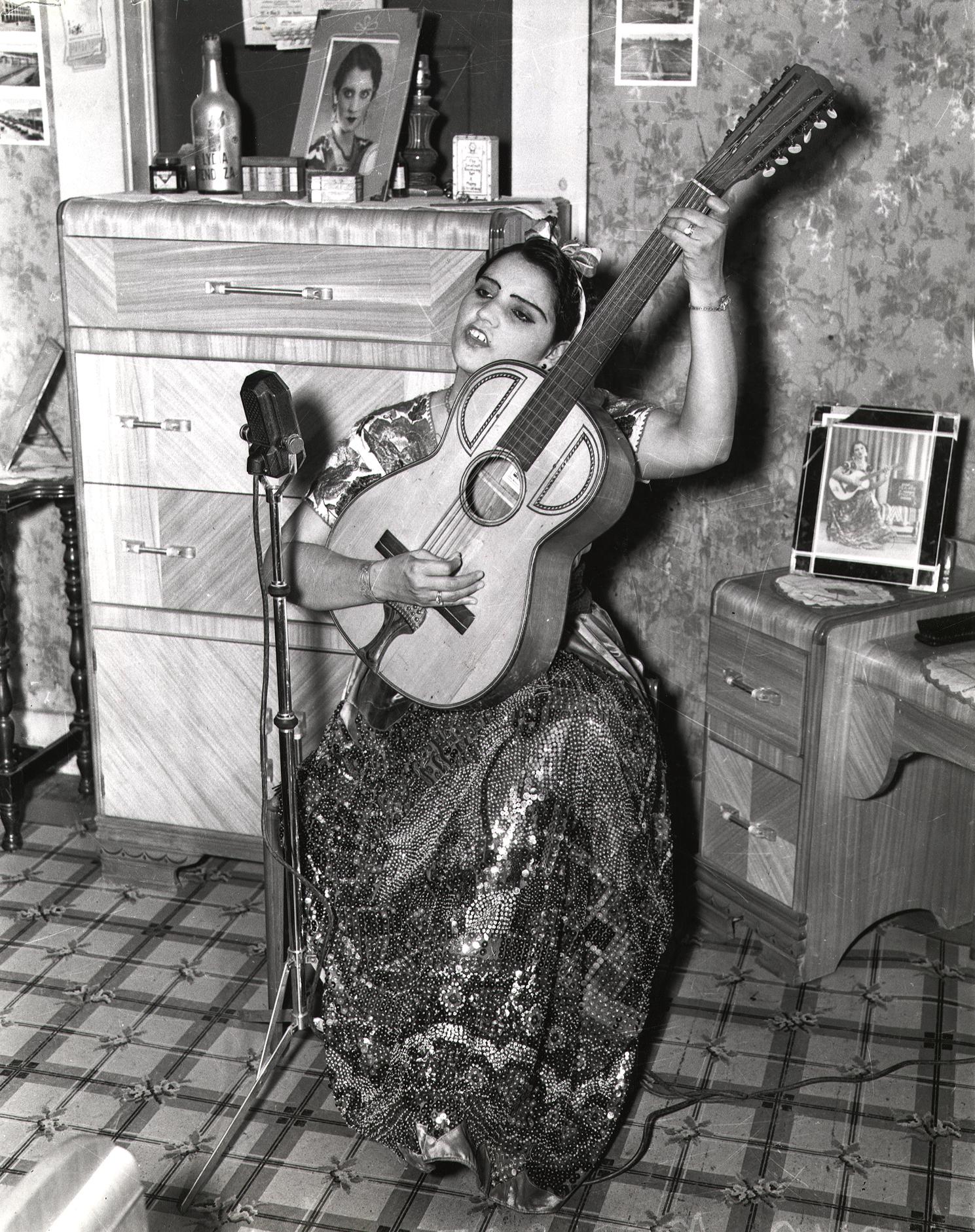
The Whole Story Route shows the marker in relation to the other communities and places. Lydia Mendoza’s photograph documents a performer, while the mapped stop identifies the former venue’s neighborhood.
See the West End stop and routeThis was infrastructure for community life
Weddings, anniversaries, birthdays, quinceañeras and concerts took place there. The dance floor could become a skating rink or boxing venue. Elisa Delgado sold hamburgers during dances and baseball games. The West End baseball team played local opponents and teams from Mexico. Diez y Seis de Septiembre celebrations drew hundreds of people.
Lydia Mendoza performed here
The marker records performances by Lydia Mendoza, one of the most influential Spanish-language singers in the Texas-Mexico borderlands. That detail places West End Park inside a much larger Texas music story. The venue was not peripheral because it served a Mexican-American audience; it was part of the cultural network through which border music circulated.
Then the buildings disappeared
The Delgados leased the property in the 1970s, and the dance hall was demolished in the 1980s. The cantina and baseball field are gone as well. What remains is memory, documentary evidence and a historic marker at Katy Street and Grape Avenue.
This is why preservation cannot be limited to beautiful buildings. Sometimes the building has already been lost. The work then becomes recovering what happened there and restoring the site to the mental map of the city.
West End was larger than one venue
The City of New Braunfels now describes Westside history in broader terms: generations of families lived, worked, worshiped, owned businesses, raised children, made music and celebrated milestones there. The City’s own cultural planning language explicitly argues that these stories should not disappear as the city grows.
Before West End: Mexican and Tejano history predates the German town
In 1825, during Mexican rule, Juan Martín de Veramendi received title to land around the springs. German colonists later acquired part of the Veramendi tract for the 1845 settlement. The region also contains the site of an eighteenth-century Spanish mission, Nuestra Señora de Guadalupe, established near present-day New Braunfels in the 1750s.
Mexican and Tejano history therefore belongs on both sides of the standard 1845 dividing line: before the German colony through sovereignty and land tenure, and afterward through community formation, labor, faith, music, business and family life.
A cultural route worth doing
- Main Plaza: understand the German-planned town that became the public face of local heritage.
- West End marker at Katy and Grape: stand where the dance hall and park once animated Mexican-American public life.
- Westside streets and institutions: observe a living neighborhood rather than treating it as an open-air museum.
- Mission marker: push the timeline back before both the German town and the modern West End.
The music tells the larger story
The City’s recent cultural reflection places several traditions side by side: quinceañeras in church halls, dances at West End Dance Hall, Tejano music at the Black Cat, country music at the Crystal Chandelier and polka at Bavarian Village. That is the New Braunfels this guide wants to reveal—several cultural histories occupying the same city, sometimes separately and sometimes in conversation.
A living neighborhood, not a heritage set
West End is still part of the social geography of New Braunfels. Its churches, parks, schools, small businesses and family networks connect earlier Mexican American institution building to present-day civic life. That continuity matters: Tejano history is not merely Spanish place names followed by a festival. It includes twentieth-century segregation, educational struggle, work, music, military service, neighborhood organizing and the ordinary work of keeping community institutions alive.
Visit public places and programs, not private lives. Spend money with local businesses, avoid photographing people as cultural scenery, and understand that rising property values and redevelopment can threaten the very continuity visitors claim to appreciate.
Music connected New Braunfels to a larger borderlands world
When Lydia Mendoza performed in West End, the significance was larger than celebrity. Her career linked working-class Mexican American audiences across South Texas through recordings, radio, traveling performance and a repertoire that spoke to hardship, dignity and emotional life. A local dance floor could therefore be both neighborhood infrastructure and part of a regional cultural network.
Segregation produced institutions, not cultural isolation
Mexican American residents built churches, clubs, ball teams, businesses and celebrations partly because equal access to the city’s institutions could not be assumed. Those institutions strengthened community while residents continued to work, trade, worship and organize across the city. West End should not be described as a sealed ethnic district; it was a community shaped by unequal boundaries and constant exchange.
Loss of the dance hall demonstrates why buildings cannot be the sole measure of importance. Music survives in memory, recordings, family stories and public markers even when the original room is gone. The absence itself should be interpreted: some communities received preservation investment later than others.
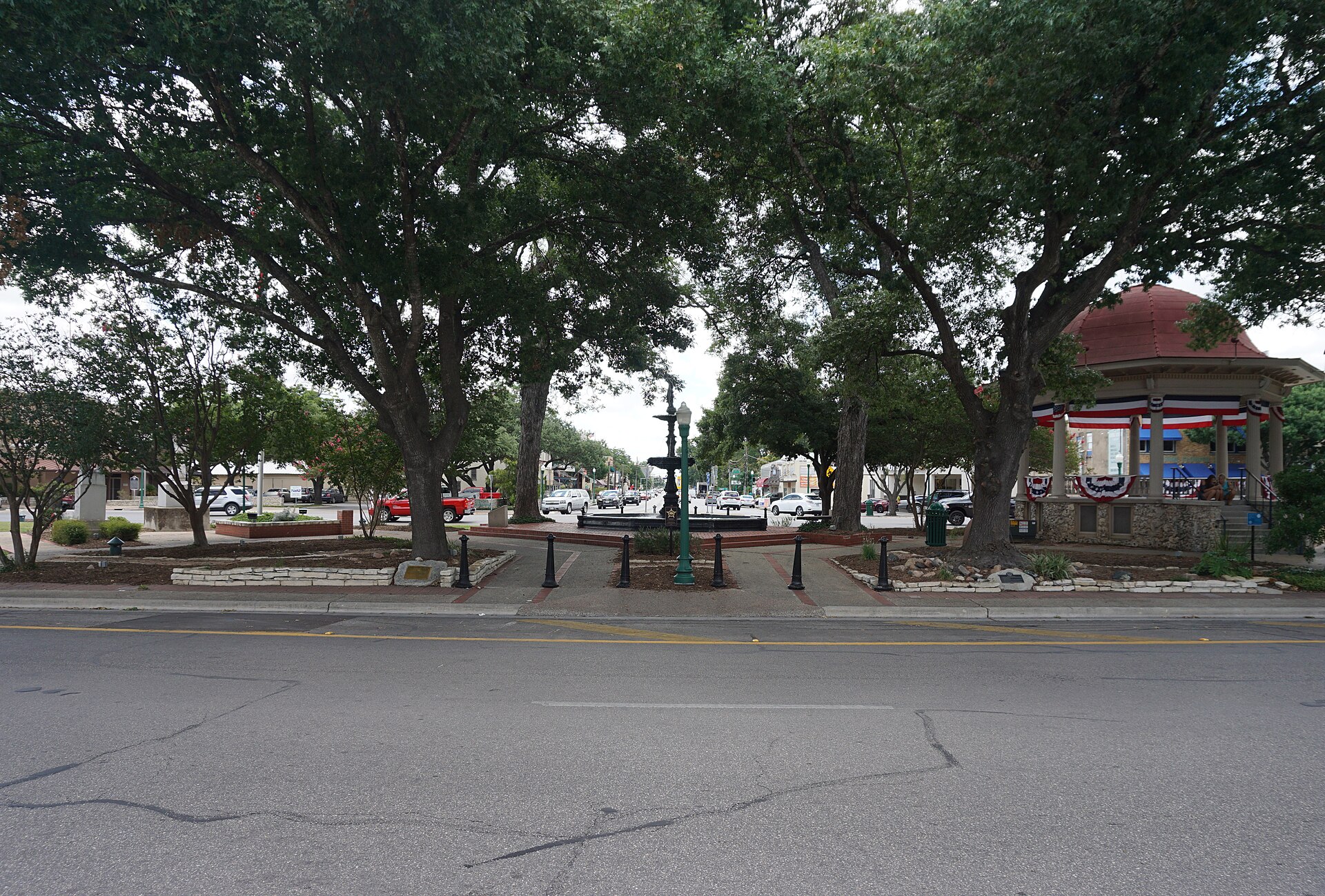
Tony’s read: Visit the marker, park and church as connected public anchors. Then pay attention to the present neighborhood. The goal is not to reconstruct a vanished “colorful” past; it is to understand how Mexican American New Braunfels helped build the city and continues to inhabit it.
Why I make that choice
Churches, businesses, murals and institutions belong to people who still use them. I support what is open to the public and leave the extraction mentality somewhere else.
A route with a fallback
Realistic time2–4 hours
Field methodConnect churches, businesses, murals and community institutions without treating the neighborhood as a display
FallbackUse public streets, scheduled programs and respectful exterior viewing
Open the field map · Follow the whole-story route · Find a current public program
Sources & further reading
- Texas Historical Commission — West End Park and Dance Hall marker
- City of New Braunfels — cultural history and Westside preservation
- City of New Braunfels — history of New Braunfels and Veramendi land grant
- Texas Historical Commission — Nuestra Señora de Guadalupe Mission marker
Tony’s Guide distinguishes documented fact from interpretation. Where the record does not identify a person or laborer by race, this guide does not invent one.