Natural Bridge Caverns
Choose this for enormous rooms, formations and multiple guided routes. It is the strongest first cave from Gruene and the easiest to make into a full attraction day.
Reliable Google Maps route →From Gruene, three Texas caves make three different days: a major cavern experience at Natural Bridge, live music in Cave Without a Name’s Throne Room, or the fault-line story beneath San Marcos.
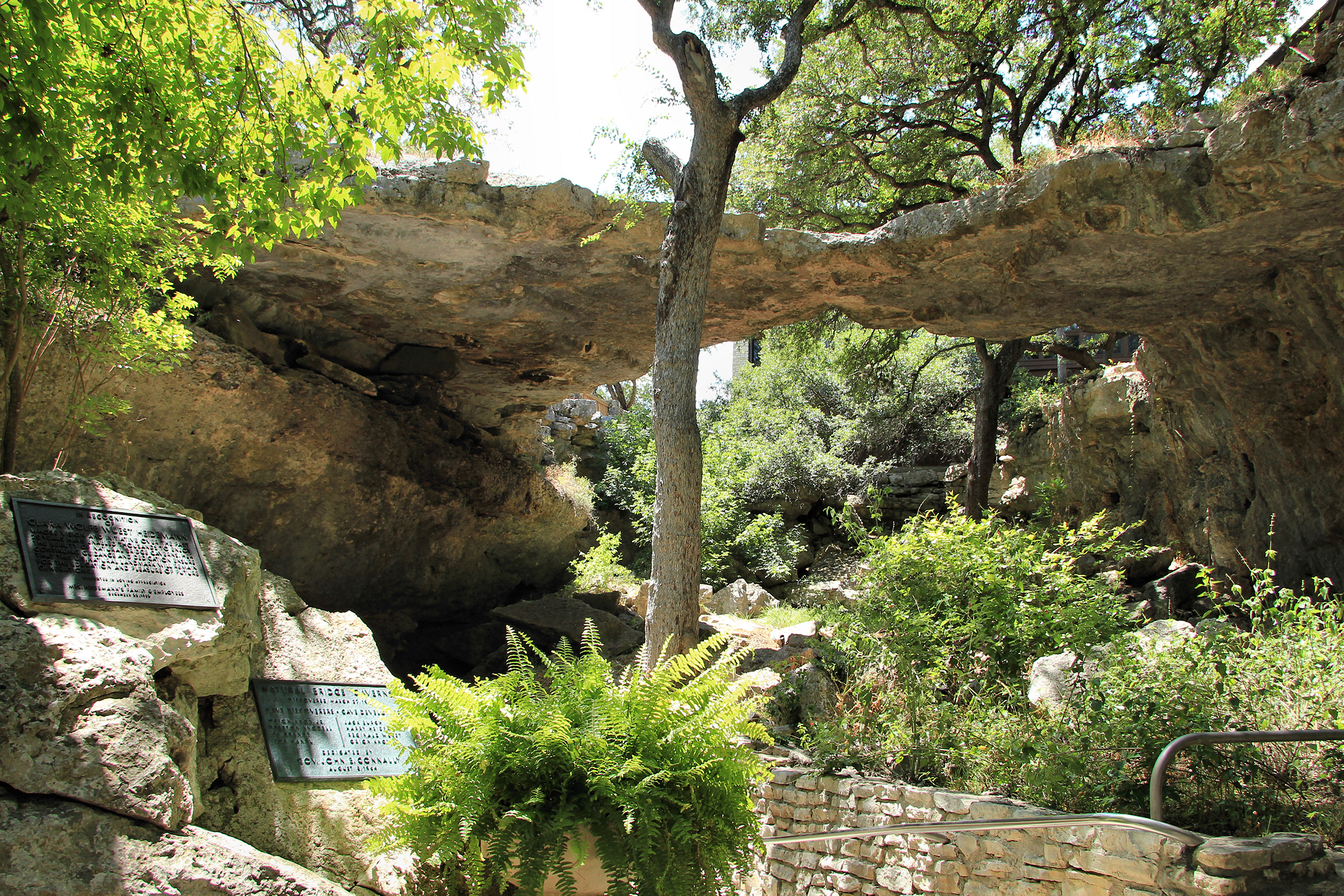
Choose this for enormous rooms, formations and multiple guided routes. It is the strongest first cave from Gruene and the easiest to make into a full attraction day.
Reliable Google Maps route →Choose this when music in the Queen’s Throne Room is the anchor. The natural chamber—not a themed theater—is the concert hall.
Reliable Google Maps route →Choose this for a contrasting geology story beneath San Marcos. It is an earthquake-formed dry cave and Texas’s first show cave.
Reliable Google Maps route →This is the closest full-scale cave experience to New Braunfels and Gruene, south of the city on the edge of Comal County. The Discovery Tour emphasizes enormous rooms and formations. Hidden Wonders enters a different cave system with its own chambers and a natural ballroom. Tour times, walking demands and pricing vary, so choose the underground experience before buying the rest of the day.
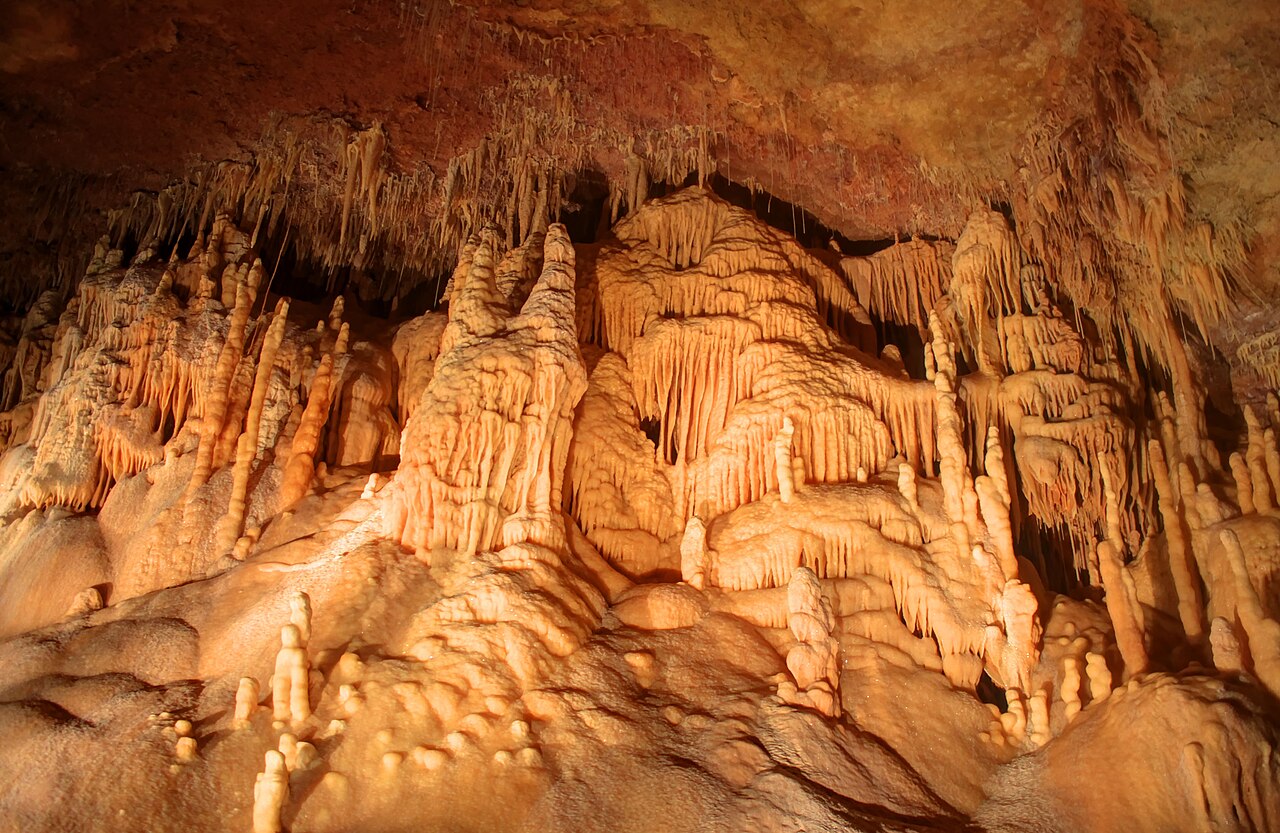
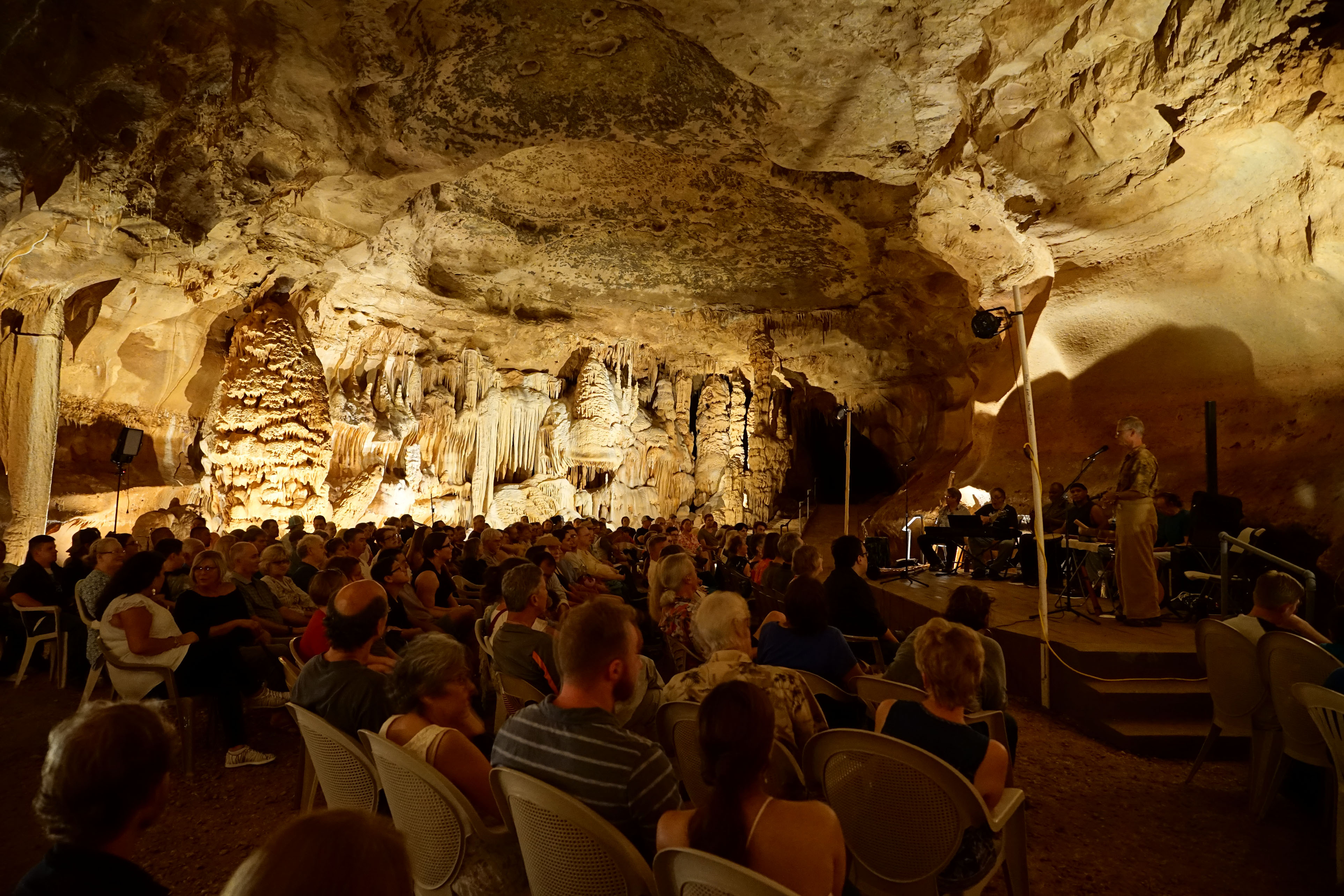
Cave Without a Name, 11 miles northeast of Boerne, has operated as a show cave since 1939. Its Queen’s Throne Room sits roughly 80 feet below the surface and hosts concerts, weddings and gatherings. Music here is not decoration added to a tour: the high-domed limestone chamber, 66-degree air and natural resonance shape the performance.
The calendar can range from cello and chamber music to Americana, vocal ensembles, seasonal programs and sound-centered performances. Most cave concerts last about 90 minutes and use open seating. A concert ticket normally provides access to the Throne Room only; it does not automatically include the separate cave tour.
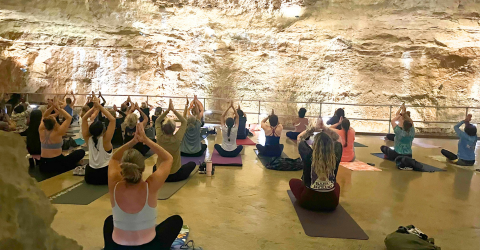
Do not confuse the two main experiences. Natural Bridge Caverns is the larger attraction near New Braunfels, with multiple tours and a broad visitor operation. Cave Without a Name is farther west and more intimate; its special strength is the union of geology and live sound. Natural Bridge also schedules occasional underground programs—such as Yoga Underground and Christmas performances—so use the events desk for the date you are actually visiting.
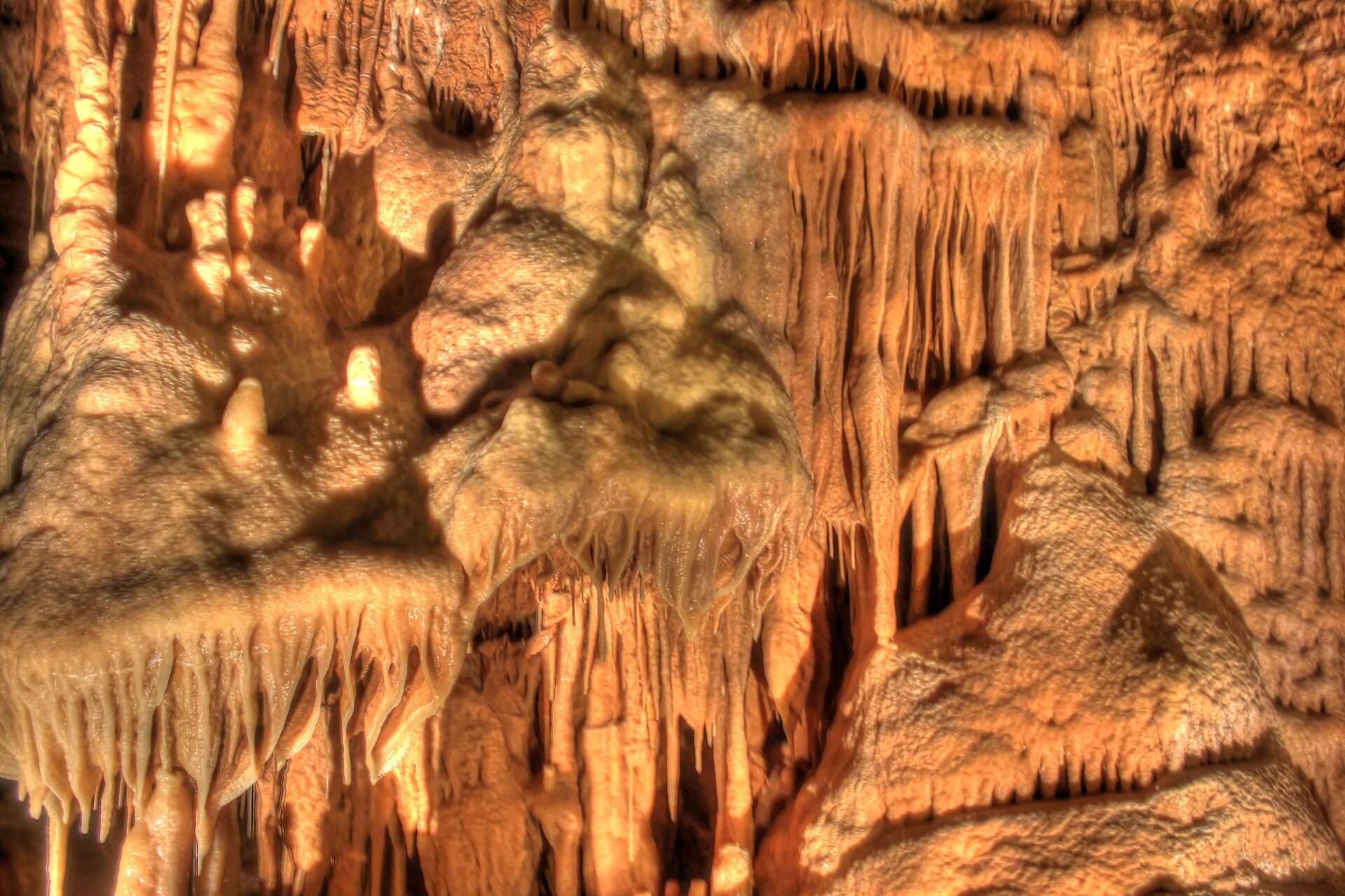
The Hill Country is a limestone landscape. Rain moves through fractures and solution channels, reappearing in springs that feed the Comal and other waterways. Caverns make that hidden plumbing visible. They also explain why groundwater, development and flood behavior cannot be separated from the region’s beauty.
The caves of this region belong to the Edwards Plateau and Balcones Fault Zone landscape. Rainwater absorbs carbon dioxide, becomes mildly acidic and moves through fractures in limestone. Over immense spans of time it enlarges those openings into passages and rooms. Mineral-rich water then deposits calcite as stalactites, stalagmites, flowstone and other formations. The cave is not a collection of decorations placed in rock; it is an active hydrologic system whose growth depends on water, chemistry and time.
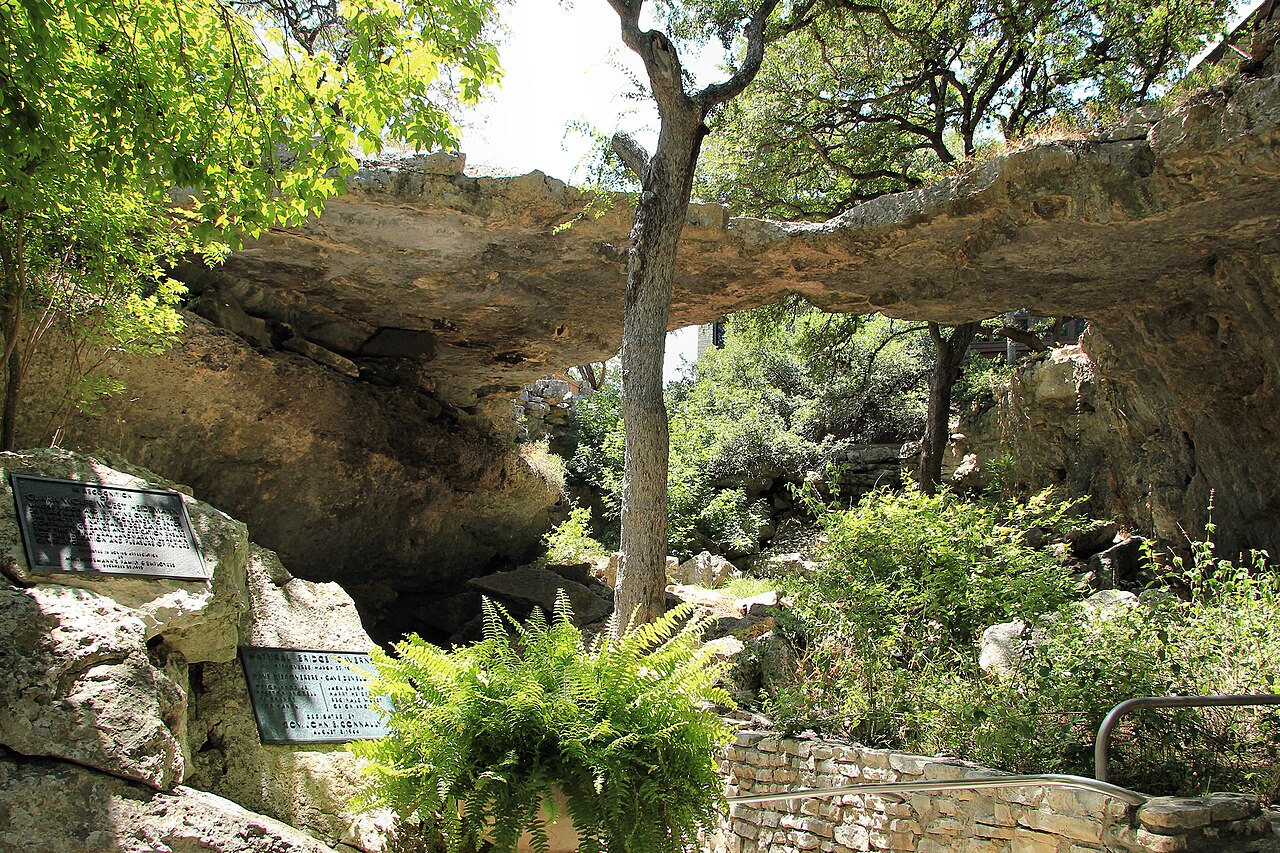
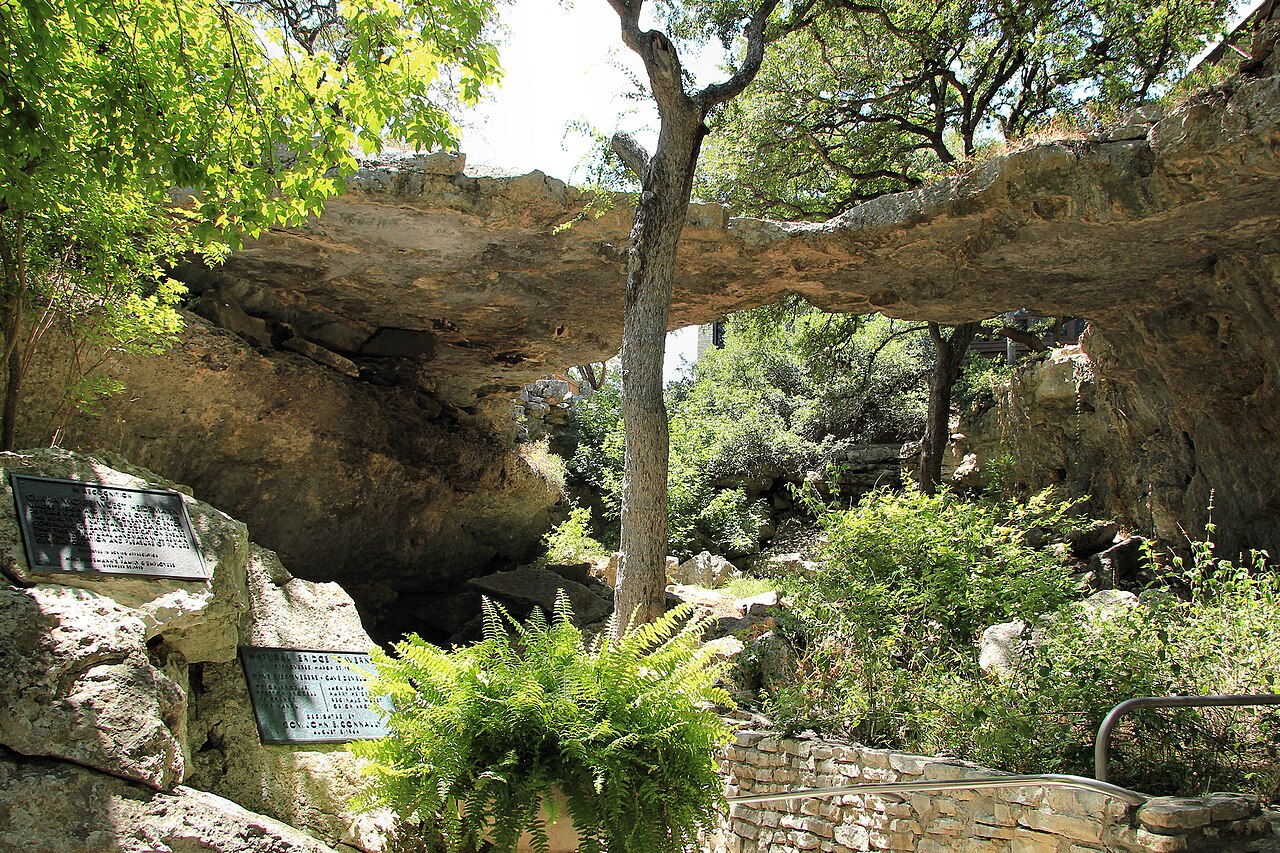
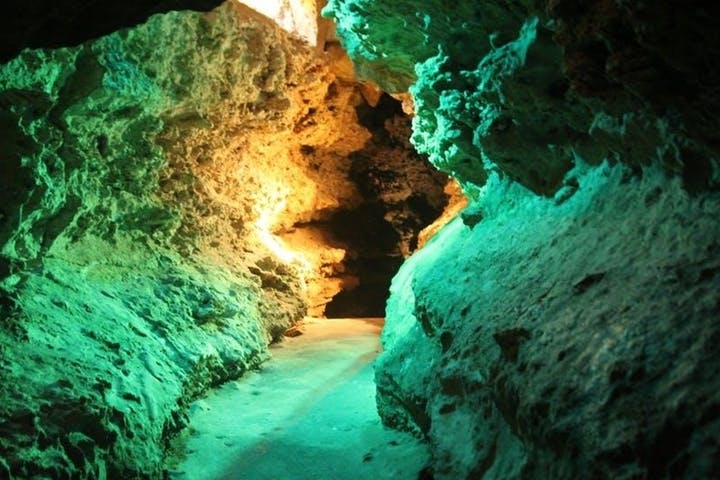
Natural Bridge Caverns is the region’s major developed cave experience. Its name comes from the natural limestone bridge above the entrance. The commercial tour system makes a difficult underground environment accessible to a broad public, but “developed” does not mean effortless. Visitors should expect stairs, grades, humidity, dim light and wet surfaces. Tour length and route differ, so the correct question is not simply whether someone can walk—it is whether they can manage that specific route without a quick exit.
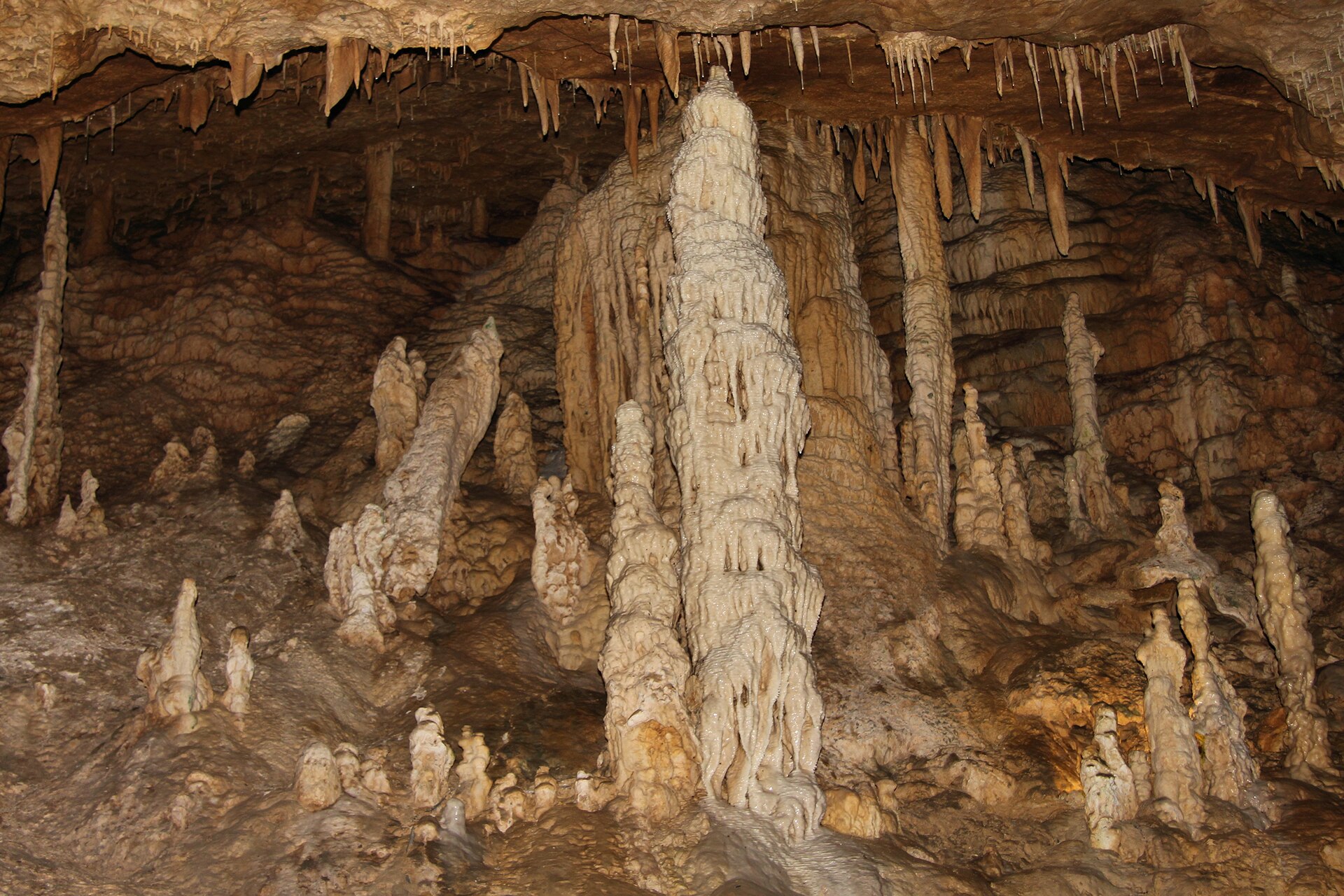
Wonder World Cave in San Marcos is associated with the Balcones Fault system and offers a contrasting experience. The operator traces its discovery to 1893 and its public opening to 1903, making it Texas’s first show cave. Rather than treating every cave as interchangeable, compare the geology, tour format and physical demands. A highly decorated solution cavern and a fault-created dry cave teach different lessons about Central Texas.
Open the exact Google Maps route from Gruene →
Caves are stable enough to preserve extraordinary formations and fragile enough to be damaged by a touch. Stay on the route, follow photography rules and do not handle formations. Oils and dirt can interfere with deposition on surfaces that took centuries to develop. The guide’s safety instruction is part of the interpretive experience because it reveals what the cave requires to survive visitation.
Before the tour, look at the surface: exposed limestone, thin soil, cedar and oak, drainage channels and sink-like depressions. Afterward, connect that landscape to Comal Springs, the Guadalupe and the region’s dependence on groundwater. A cave visit becomes far richer when it explains why water appears, disappears and re-emerges across the Hill Country.
A formation that appears solid may record only a fraction of a millimeter of growth in a year. That scale changes the ethics of the visit. The railing, prescribed route and prohibition on touching are not theatrical restrictions; they protect surfaces that cannot be repaired on a human timetable. Photography should never require leaving the route or delaying the group.
Families should explain this before entering, not after a child reaches toward a formation. The cave offers a rare lesson in restraint: seeing closely does not confer ownership. That principle connects the underground tour to springs, aquifers and every water-dependent landscape above it.
Cave attractions can include outdoor queues, steep approaches and heat before or after the tour. Carry water, arrive early and reserve the route that matches the least mobile member of the group. Severe weather may affect roads and operations even when the underground temperature remains stable. Confirm directly rather than assuming the cave makes weather irrelevant.
The most useful cave visit does not end at the exit. It makes the surface landscape legible: rain enters fractured limestone, moves through hidden passages and reappears at springs that support rivers, wildlife and communities. That connection is why development, groundwater pumping and pollution far from a cave entrance can still matter underground. Leave with a sharper question for the rest of the trip: where does the water beneath this place come from, and where will it emerge?
I would choose Cave Without a Name when the quieter tour or an underground concert is worth the longer drive. I would not stack both into one day; by the second cave, most people are collecting formations instead of seeing them.
Realistic time3–6 hours
Cost postureTicketed; premium tours and add-ons cost more
Access realityStairs, slopes and confined terrain vary by tour
Open the field map · Check current events · Check lake, river and weather conditions
Natural Bridge Caverns tours · Current hours · Cave Without a Name and concert calendar · Tony’s events desk