Arrive near opening and share several meats and sides
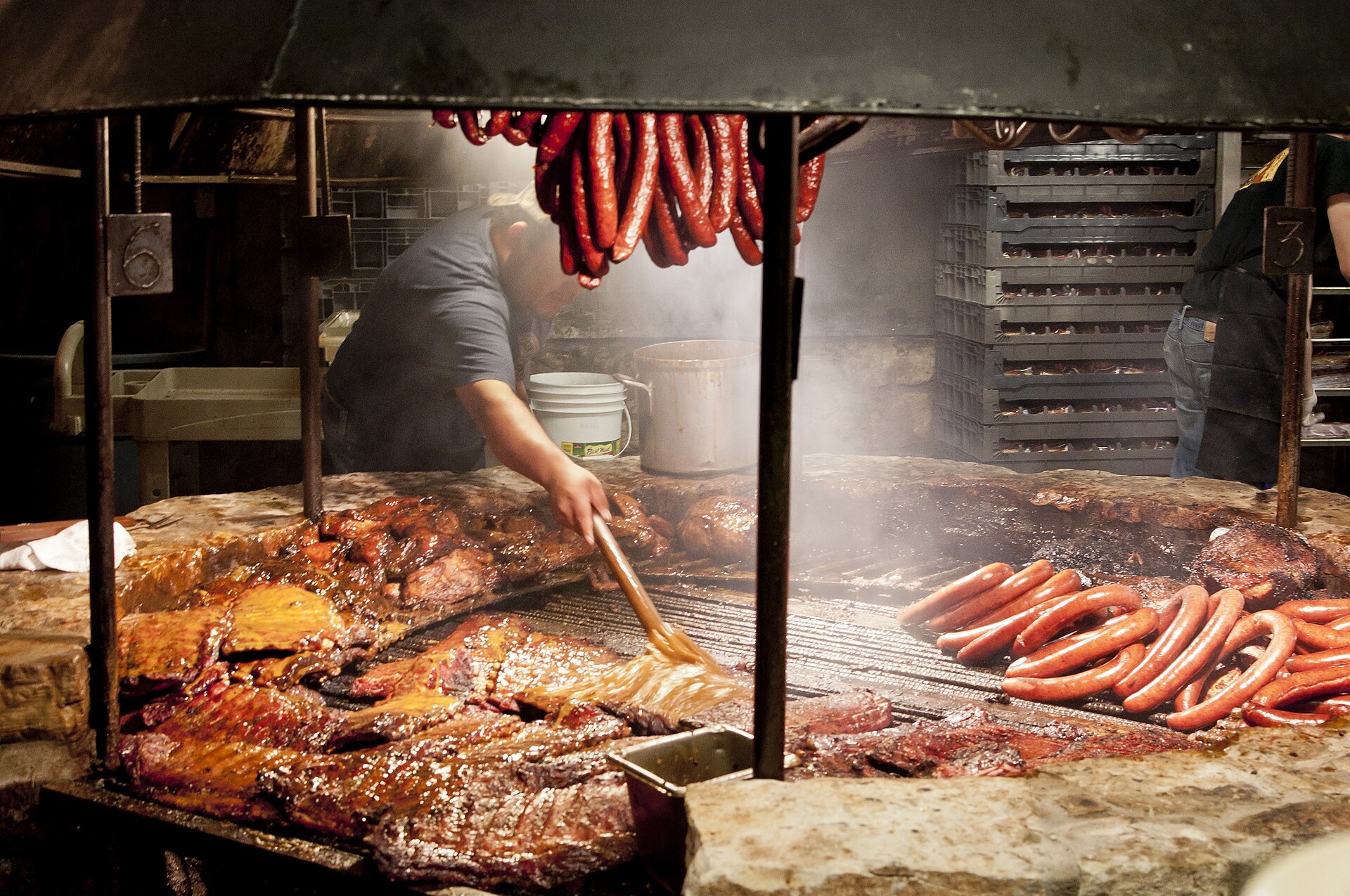
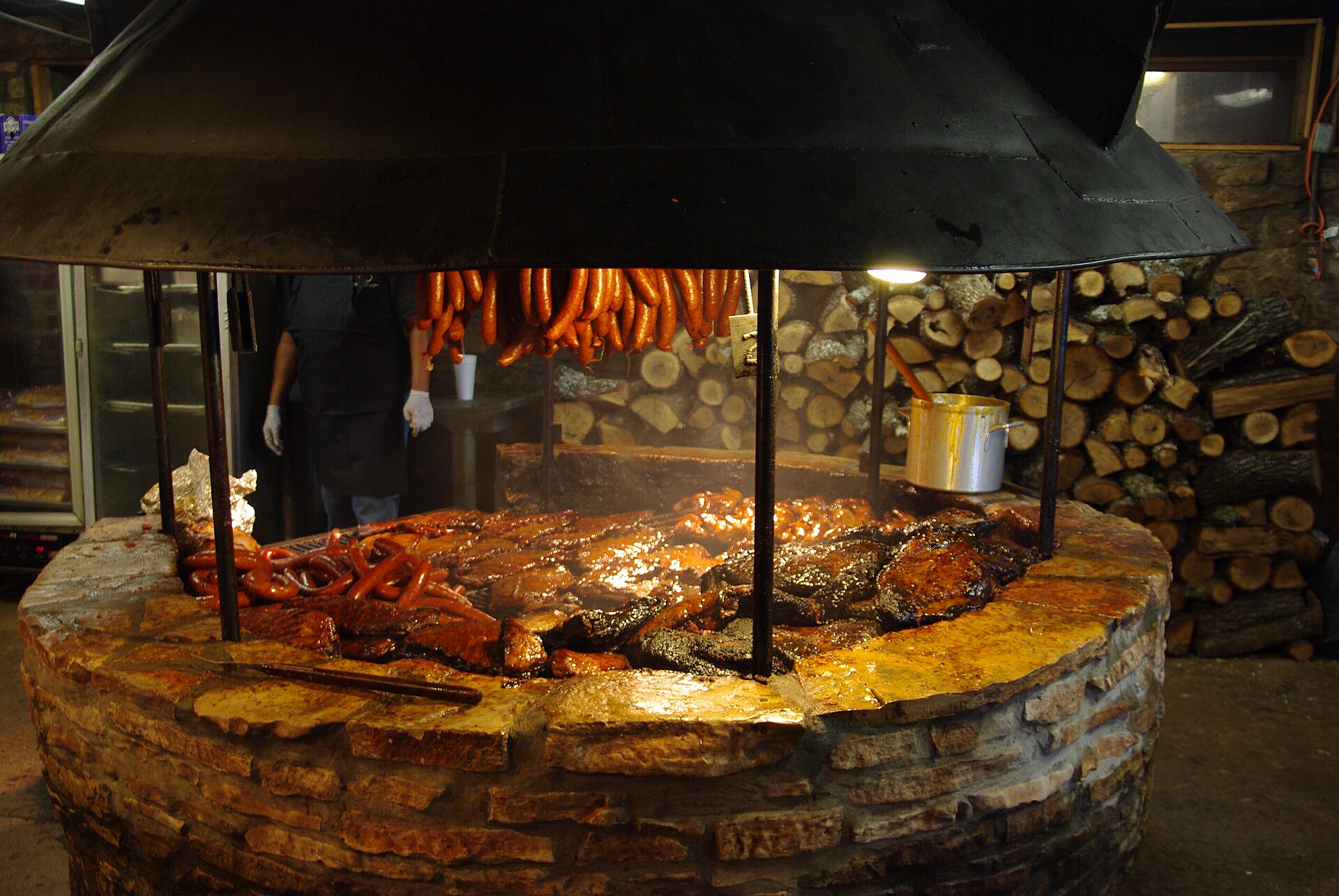
I have a personal favorite, and I am not going to pretend otherwise: The Salt Lick in Driftwood. There are places where a barbecue specialist may argue over a cleaner slice of brisket or a more severe pepper bark. That is a useful argument. It is not the whole argument. Salt Lick gives me the full Hill Country outing: the road into Driftwood, the oak-shaded grounds, the open pit, long tables and a meal built to be shared.
The Salt Lick: go for the whole experience
The Roberts family traces its Texas story through six generations; the Driftwood restaurant began in 1967. The famous circular pit is not hidden behind the building. You meet it when you arrive. Meat is smoked and finished over live fire, and the house sauce brings a sweeter, tangier profile than the austere salt-and-pepper school many visitors expect.
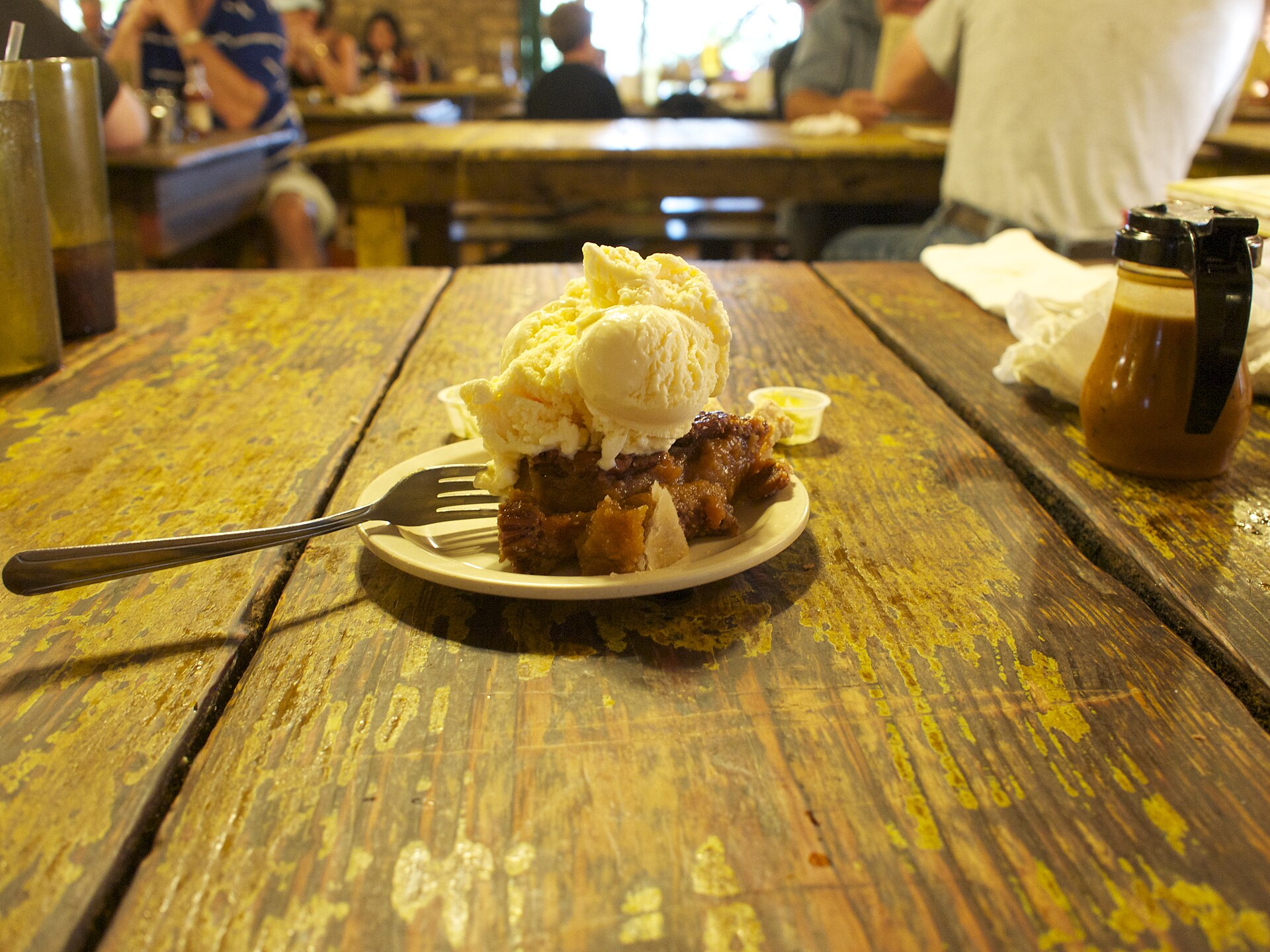
Tony’s order: Family Style when the table is hungry and willing to share—brisket, sausage and pork ribs with potato salad, slaw and beans. Add the pecan pie if the meal has not already defeated you. This is an occasion, not a rushed lunch.
Know before you drive
- The original Driftwood location is the one I mean. Do not let navigation quietly substitute an airport or suburban outpost.
- Peak weekends bring waits. Treat Driftwood as the anchor of a half-day, not the stop squeezed between three other attractions.
- Check current payment, alcohol and seating policies directly before leaving; policies change.
- Combine it with Wimberley, a Hill Country drive or a stop at nearby vineyards—not with a tight Gruene Hall showtime.
Choose the barbecue trip you actually want
Close and easyNew Braunfels and Gruene options work when barbecue is one part of the day. Use the searchable dining guide for current choices and geography.
A Hill Country occasionDrive to Salt Lick in Driftwood. The setting, pit and communal rhythm justify making the meal the day’s anchor.
A smoke-room pilgrimageLockhart and Luling belong to the older meat-market tradition: order at the counter, compare sausage and brisket, and let the town be part of the meal.
Modern pitmaster precisionAustin and San Antonio contain nationally known rooms, but lines and sell-outs can govern the day. Confirm service format and availability.
The nearby field list
New Braunfels: Black’s Barbecue, Cooper’s Old Time Pit Bar-B-Que and Coronado’s Sweet Heat BBQ give visitors different versions of a practical local meal. Seguin: Burnt Bean Co. can justify an early start, but availability and lines matter. San Marcos: Hays Co. Bar-B-Que is a useful I-35 stop. Luling: City Market ties barbecue to the oil town east of the Balcones Escarpment. Lockhart: Kreuz Market, Smitty’s, Black’s and Barbs B Q make comparison itself the attraction.
The point is not to collect famous names. Pick one room that fits the route, arrive with time, order enough to understand the pit, and pay attention to what each place believes barbecue ought to be.
Barbecue is a production schedule
Central Texas barbecue grew from meat markets, butchers, smoke, preservation, immigrant craft and the economics of selling what was available. The contemporary destination restaurant may look effortless, yet brisket, sausage and ribs are the result of long cooking, fuel management and daily demand. When a place sells out, that is not always manufactured scarcity; it can be the natural limit of a process started many hours earlier.
This is why timing is part of eating. Decide whether barbecue is the day’s anchor. If it is, arrive near opening and accept the line as part of the visit. If the river, cave or music is the anchor, choose a dependable secondary option and protect the reservation. Driving an hour after an outdoor day only to discover a sold-out pit is not culinary adventure.
Read the tray
Order enough to taste differences without creating waste. Brisket reveals smoke, bark, rendering and slicing. Sausage carries the history of butcher shops and German and Czech traditions, while every pit develops its own texture and seasoning. Pork ribs and turkey show how the cook handles leaner or differently structured meat. Pickles, onions, bread and sauce are not proof that the meat failed; they are part of the regional grammar.
Respect the place beyond the brand
The famous name is not automatically the best fit for every trip. Consider line tolerance, seating, accessibility, heat, children and the drive afterward. A less celebrated counter that serves the group well can produce the better day. Credit craft without turning working communities into themed scenery.
Make the detour earn its miles
Luling and Lockhart can anchor a barbecue day, but they should not be casually added to a crowded New Braunfels itinerary. Check opening days, serving hours and sellout patterns. Pair the meal with one nearby walk, museum or landscape rather than rushing back for another reservation. Barbecue is slow food; the day should acknowledge that.
Accessibility and comfort are part of the meal
Lines may be outdoors, seating may be communal and historic buildings can have tight routes. Ask about step-free entry and the likely wait when those conditions matter. Bring water for the line and a cooler plan for leftovers. A famous tray eaten by an overheated, exhausted group is not a successful pilgrimage.
Judge the whole plate
Brisket receives the attention, but a serious barbecue stop reveals itself through balance: sausage texture, smoke restraint, properly rendered fat, fresh sides, bread or tortillas, pickles and the pace of service. Regional traditions overlap rather than obeying rigid borders, and every pit has daily variation. Order enough to compare, share across the table and notice what the restaurant does especially well instead of grading the meal against an imaginary universal champion.
Why I make that choice
I do not worship brisket or drive an hour after a river day to discover a sellout. A dependable second choice is better than turning lunch into a failed expedition.
Plan the experience
Essential, full and fallback
Realistic time1–3 hours plus driving
Cost postureModerate; ordering by weight can raise the bill quickly
Access realitySellouts, lines and limited service days are common
Open the field map · Check current events · Check lake, river and weather conditions
Plan from primary sources
The Salt Lick · Driftwood · Salt Lick family history · Tony’s complete dining finder